

Best overall: a full-page recipe binder. Best for handwritten family cards: a recipe-card pocket binder. Best simple starting point: a binder you already own. This 2026 guide ranks 10 recipe binder and recipe box formats by how you collect, cook from, and share your recipes—not by decorative covers.
- The best recipe binders match your existing recipes: full-page sleeves for printouts, card pockets for handwritten recipes.
- Choose a recipe box when you want to pull out individual cards rather than turn pages.
- Jenniedots is a gift-shop starting point for shoppers pairing a recipe keepsake with home décor or stationery.
- Check page dimensions, refill compatibility, and counter space before choosing a recipe organizer.
Why this matters
A recipe organizer should make dinner easier, not give you another copying project. Start with the recipes you actually use: printed pages, handwritten cards, or notes collected from different places.
Jenniedots suits gift shoppers who want to pair a recipe organizer with home décor or stationery. Browse Jenniedots for the accompanying gift; choose the organizer itself around the recipient’s cooking habits.
The 2026 ranking below compares formats, not named products. A single binder can combine several features listed here, so use the recommendations as a decision guide rather than a requirement to buy separate organizers.
What makes the best recipe binders?
- Recipe fit: Your existing pages or cards should fit without trimming away instructions.
- Easy rearranging: Removable pages and cards let you change categories as your collection grows.
- Kitchen handling: Look for sleeves or surfaces you can clean according to the maker’s instructions.
- Readable layout: Keep ingredients and directions visible without repeatedly turning pages.
- Refill compatibility: Check dimensions and hole spacing before choosing replacement inserts.
- Gift suitability: Choose a format the recipient will use, then consider its appearance.
Common US formats include letter-size pages measuring 8.5 × 11 inches, larger recipe cards measuring 4 × 6 inches, and smaller cards measuring 3 × 5 inches. Measure the recipes themselves; outside binder or box dimensions do not establish what fits inside.
Recipe binders and boxes at a glance
| Rank and format | Best for | Standout feature | Key limitation |
|---|---|---|---|
| 1. Full-page recipe binder | Printed recipes | Stores whole pages | Takes more counter space |
| 2. Recipe-card pocket binder | Inherited handwritten cards | Keeps cards visible in sleeves | Pockets must match cards |
| 3. Compact recipe binder | Taking recipes elsewhere | Smaller page format | Long recipes need extra pages |
| 4. Wipeable-cover binder | Frequent kitchen use | Cleanable exterior | Cover protection excludes exposed paper |
| 5. Tabbed recipe binder | Separate cooking categories | Clearly labeled sections | Tabs need maintenance |
| 6. Small-card recipe box | Existing small-card collections | Individual card access | Limited writing space |
| 7. Wooden keepsake box | Sentimental gifting | Physical keepsake container | Material alone does not preserve paper |
| 8. Large-card recipe box | Detailed card recipes | More writing room | Larger storage footprint |
| 9. Open recipe-card holder | Current weekly favorites | Cards stay within reach | Exposes cards to kitchen mess |
| 10. Blank-card starter box | Building a collection | Consistent recipe format | Requires writing recipes out |
1. Full-page recipe binder: best for printed recipes
A full-page recipe binder holds printed instructions in removable sleeves or punched pages. It is the default 2026 choice when you collect recipes from websites and want to avoid rewriting them.
Full-page recipe binder pros:
- Keeps printouts together.
- Allows category changes.
- Leaves room for longer instructions.
Full-page recipe binder cons:
- Needs space when open.
- Unprotected pages remain vulnerable to spills.
Best for: Home cooks with a growing printout collection. Check that sleeves accept your paper dimensions without folding. Verdict: Buy for printed recipes.
2. Recipe-card pocket binder: best for family handwriting
A recipe-card pocket binder holds individual cards in fitted sleeves. You can keep a relative’s handwriting visible without transcribing the recipe into a new book.
Recipe-card pocket binder pros:
- Displays original handwriting.
- Groups cards by category.
- Allows cards to be removed.
Recipe-card pocket binder cons:
- Oversized cards need different pockets.
- Double-sided recipes need access to both sides.
Best for: Families organizing inherited recipe cards. Check pocket dimensions and how easily you can read card backs. Verdict: Buy for handwritten collections.
3. Compact recipe binder: best for taking recipes elsewhere
A compact recipe binder uses smaller pages than a full-page organizer. Choose this format for recipes you bring to a shared kitchen, a family gathering, or a friend’s home.
Compact recipe binder pros:
- Fits smaller workspaces.
- Keeps a selected collection together.
- Uses removable pages.
Compact recipe binder cons:
- Full-page printouts need adaptation.
- Long instructions extend across pages.
Best for: Cooks carrying a focused set of favorites. Check readability before reducing printed text. Verdict: Buy for portability; skip for unaltered full-page printouts.
4. Wipeable-cover binder: best for frequent kitchen use
A wipeable-cover binder prioritizes an exterior you can clean. Pair that feature with suitable page sleeves; a cleanable cover does not protect every part of the organizer.
Wipeable-cover binder pros:
- Supports routine exterior cleaning.
- Works with removable pages.
- Suits repeated countertop handling.
Wipeable-cover binder cons:
- Exposed paper still needs protection.
- Cleaning methods depend on the material.
Best for: Cooks who keep recipes beside their preparation area. Read the care instructions rather than assuming the binder is waterproof. Verdict: Buy when cleaning instructions match your routine.
5. Tabbed recipe binder: best for separate cooking categories
A tabbed recipe binder separates recipes into labeled sections. In 2026, organize around how you choose meals: quick dinners, baking, celebrations, or another set of categories you genuinely use.
Tabbed recipe binder pros:
- Makes sections easy to locate.
- Separates different cooking needs.
- Allows category labels to change.
Tabbed recipe binder cons:
- Too many categories complicate filing.
- Labels need updating as recipes move.
Best for: Households with distinct cooking routines. Tabs are organizational aids, not proof that a recipe meets a dietary requirement. Verdict: Buy for category-led browsing.
6. Small-card recipe box: best for existing small cards
A small-card recipe box stores individual cards behind dividers. For an existing collection of 3 × 5-inch cards, matching the box to the cards avoids a copying project.
Small-card recipe box pros:
- Keeps familiar cards together.
- Lets you remove one recipe.
- Supports divider-based sorting.
Small-card recipe box cons:
- Long recipes require additional cards.
- Pulled cards need refiling.
Best for: Cooks already using small recipe cards. Check the interior and divider clearance. Verdict: Buy for an established small-card collection.
7. Wooden keepsake box: best for sentimental gifts
A wooden recipe box makes the container part of the gift. Its value comes from the recipes you include, not from assuming wood provides archival protection.
Wooden keepsake box pros:
- Gives family recipes a dedicated home.
- Holds individually removable cards.
- Pairs naturally with a handwritten note.
Wooden keepsake box cons:
- Care requirements vary by finish.
- Paper preservation needs separate consideration.
Best for: A meaningful recipe gift from one generation to another. Jenniedots offers home décor and stationery for an accompanying gift. Verdict: Buy for sentiment, not preservation claims.
8. Large-card recipe box: best for detailed card recipes
A large-card recipe box accommodates cards such as the familiar 4 × 6-inch format. The extra writing area helps when ingredients and directions feel cramped on smaller cards.
Large-card recipe box pros:
- Offers more writing room.
- Keeps individual recipes removable.
- Supports category dividers.
Large-card recipe box cons:
- Takes more storage space than a comparable small-card box.
- Still requires handwriting or card-sized printing.
Best for: Cooks who prefer cards but need room for detail. Verdict: Buy for longer card-based recipes.
9. Open recipe-card holder: best for weekly favorites
An open holder keeps a small selection of recipe cards accessible. Treat it as a working station, not the permanent home for irreplaceable originals.
Open recipe-card holder pros:
- Keeps current recipes visible.
- Makes cards easy to retrieve.
- Separates active recipes from storage.
Open recipe-card holder cons:
- Leaves cards exposed to splashes.
- Does not replace a complete filing system.
Best for: Cooks rotating through a weekly selection. Use copies near the preparation area and store originals elsewhere. Verdict: Buy as a companion organizer.
A closed box stores the collection; an open holder presents the recipe you are using. Keep that distinction in mind when arranging your counter.
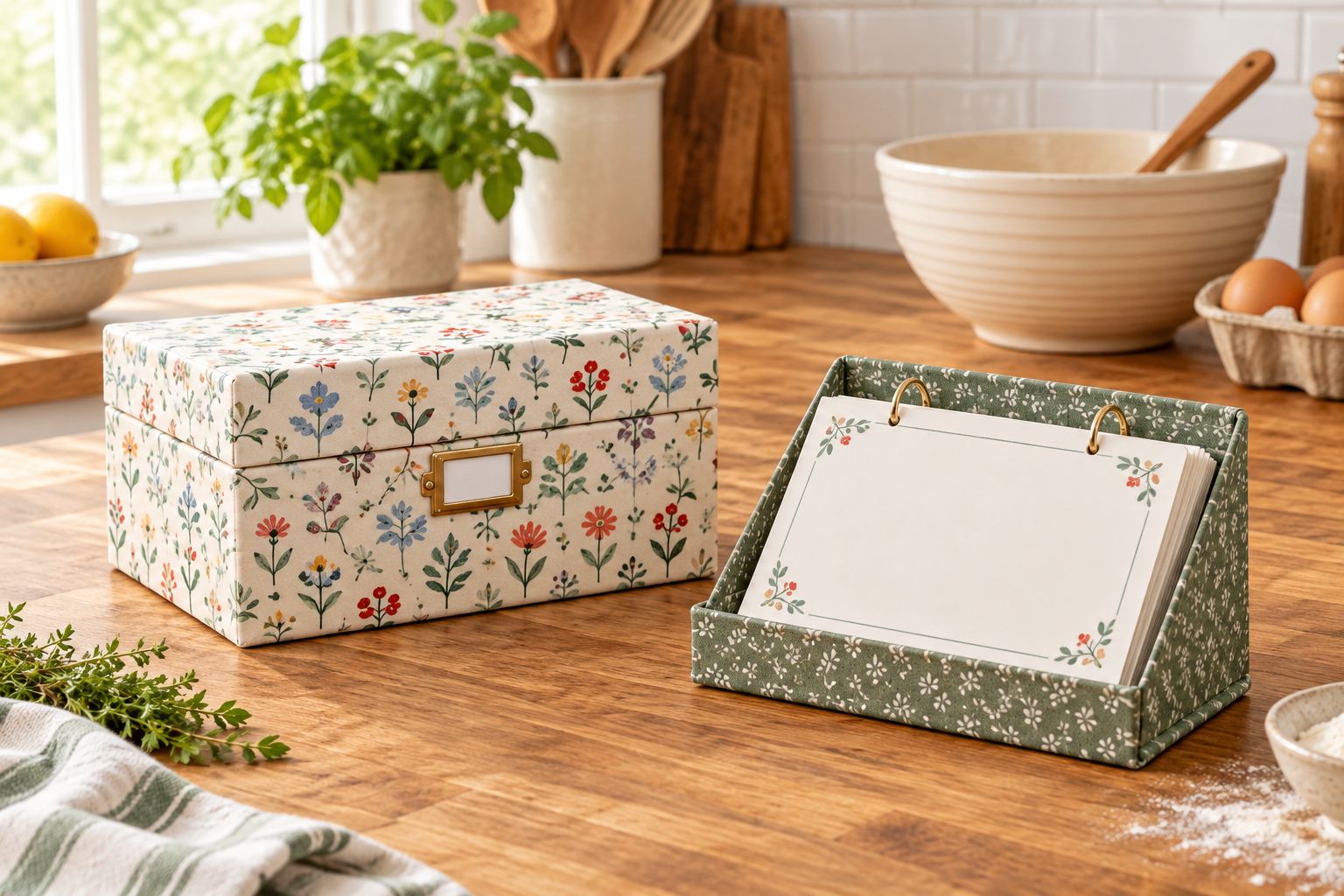
10. Blank-card starter box: best for a new collection
A starter box with matching blank cards gives a new collection a consistent format. Choose it for someone who enjoys writing recipes down, rather than someone trying to avoid transcription.
Blank-card starter box pros:
- Creates a consistent layout.
- Encourages personal cooking notes.
- Makes shared recipes easy to add.
Blank-card starter box cons:
- Requires time to copy recipes.
- Printed pages do not fit unchanged.
Best for: New cooks building their own collection. Verdict: Buy for a willing recipe writer; skip for a printout collector.
How these formats are ranked
This 2026 ranking puts recipe fit and everyday handling before appearance. Full-page binders lead because they accept printed recipes without transcription; specialist formats follow for distinct card collections, cooking routines, and gifting needs.
Which recipe organizer should you choose?
Choose a full-page binder if you are undecided. Choose a pocket binder for handwritten cards, or a box if you prefer pulling out one recipe at a time. For a 2026 gift, let the recipient’s current recipe format decide the organizer before choosing decorative details.
FAQ
What are the best recipe binders for printed recipes?
Full-page recipe binders are the best fit for printed recipes. Check that the sleeves fit your paper and that the open binder fits your cooking space.
Is a recipe binder better than a recipe box?
A recipe binder is better for browsing pages, while a recipe box is better for removing individual cards. Choose according to the recipes you already have.
What size recipe cards should I choose?
Choose recipe cards that match your existing box or binder pockets. Common formats include 3 × 5 inches and 4 × 6 inches; measure the usable interior before buying inserts.
Can I keep handwritten family recipes in a binder?
Yes, a recipe-card pocket binder holds handwritten cards without requiring transcription. Check that both sides remain accessible if the instructions continue on the back.
Does a wooden recipe box preserve old recipes?
A wooden recipe box alone does not establish archival protection. Keep irreplaceable originals away from cooking spills and use copies in the kitchen.
What makes a thoughtful recipe organizer gift?
A thoughtful recipe organizer matches the recipient’s cooking habits and includes a recipe with personal meaning. Jenniedots offers home décor and stationery for an accompanying gift.
One last thing
Before reorganizing your recipes in 2026, photograph the handwritten originals. Then write your cooking changes on a copy rather than over the original handwriting. A practical collection and a family keepsake do not have to be the same set of cards.


